Group Nom


From idea to live product, solo. Strategy, design, code, and a mid-build pivot.
My Role: Everything. Product strategy, user research, brand design, UX/UI, full-stack development (Next.js, TypeScript), and ongoing iteration.
Status: Live at groupnom.com
Tech Stack: Next.js 16 (App Router), TypeScript, Tailwind CSS, Clerk (auth), Vercel KV (Redis), Google Places API, Vercel Analytics
The Problem
Every friend group knows this one. "Where should we eat?" turns into an endless loop of rejected suggestions, dietary constraints, and decision paralysis. Traditional solutions (group chats, polls, taking turns picking) rarely satisfy everyone and usually end at the same default restaurants.
The problem is real and frequent, but the existing solutions treat it as an individual search problem. You get apps that help one person find a restaurant. Nobody was building for the group decision, which is where the actual friction lives.
Why I Built This
Group Nom started as a way to solve that problem. But it was also a deliberate test of something I'd been thinking about: what's actually possible when one person handles product strategy, design, and code, with AI accelerating the execution?
I wasn't trying to prove that AI replaces teams. I wanted to understand where the real speed gains are, where human judgment still matters most, and what the limits look like in practice. Building a real product with real users was the only honest way to find out.
Key Product Decisions
Zero-friction entry
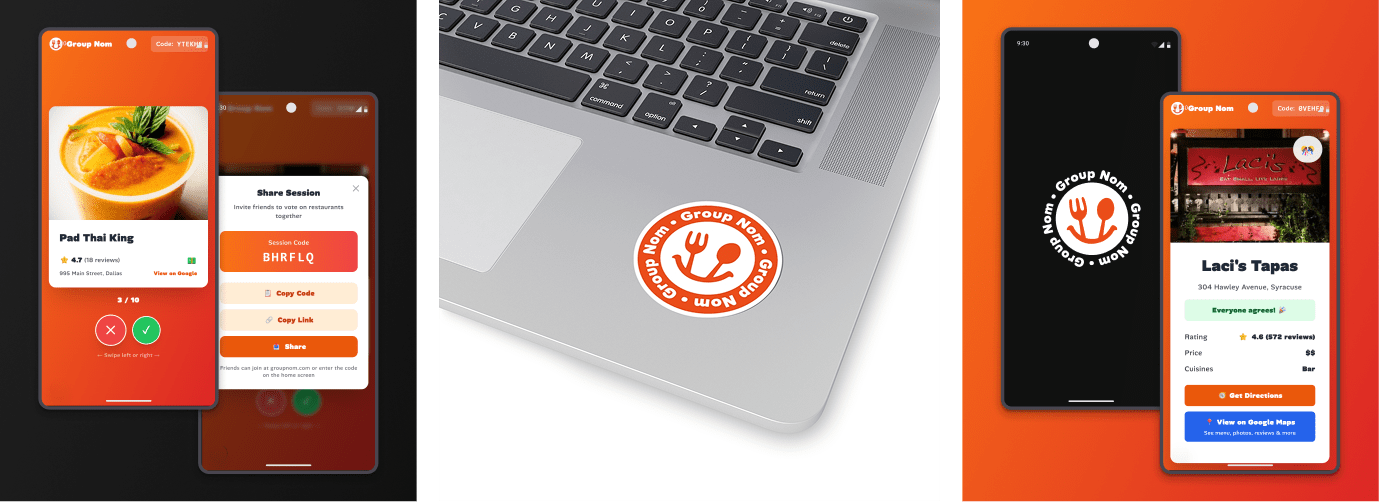
No app download. No account required to join a session. One person creates a session, shares a 6-digit code, and everyone else is in. I made this decision early because every extra step in a group context is a multiplier on drop-off. If even one person in the group can't get in easily, the whole session fails.
Swiping as group mechanic
The swipe interface is familiar from dating apps, but applied to a group context. Everyone swipes independently on nearby restaurants (right for yes, left for no), and the app surfaces matches when the group agrees. This removes the social awkwardness of rejecting someone's suggestion directly. You're swiping on restaurants, not vetoing your friend's idea.
Session-based, not account-based
Most features are tied to the session, not to individual user accounts. This was a deliberate tradeoff: I gave up long-term user data in exchange for eliminating signup friction. For a product where the core value is quick group decisions, reducing time-to-value mattered more than building user profiles.
The Pivot
Early on, I used the Google Places API to get to market quickly. It worked for a beta, but I hit two walls:
Cost. Every restaurant lookup is an API call. With group sessions multiplying requests, costs would scale badly.
Data ownership. Google's terms prevent caching their data. That meant I couldn't build features that required storing or analyzing restaurant information over time. User-requested features like dietary filtering, group preference history, and personalized recommendations were all impossible under these constraints.
The conventional move would have been to optimize around the API limits. Instead, I decided to build Group Nom's own restaurant data layer. This was a bigger investment, but it removed the ceiling on what the product could become. Features that weren't possible with third-party data constraints are now on the roadmap.
This was the hardest product decision in the project. Moving off a working integration to build something from scratch, mid-build, with no team to share the work. But the alternative was shipping a product that could never grow past its initial feature set.
How I Built It
I handled the full stack: product thinking, design, brand identity, frontend and backend development, deployment, and ongoing iteration.
Product and research: Started in FigJam, mapping the problem space, user needs, and system requirements. Collecting both quantitative data (Vercel Analytics) and qualitative feedback through user interviews and direct feedback from beta users. Used AI to help synthesize findings and pressure-test assumptions.
Design: Wireframed the core flows around jobs to be done, then moved to high-fidelity design. Built a complete brand system (more on that below). Designed for mobile-first since most group dining decisions happen on phones, in the moment.
Development: Built with Next.js and TypeScript using AI-assisted development (Claude Code with VS Code). Used Clerk for authentication, Vercel KV (Redis) for real-time session state, and deployed on Vercel. The AI acceleration was most useful for scaffolding components and handling boilerplate. Architecture decisions, state management logic, and edge case handling still required my own judgment.
What AI handled well: Generating component scaffolding, writing boilerplate, drafting copy variations, accelerating repetitive implementation work.
What still required my judgment: Product strategy and positioning. UX decisions. System architecture. Knowing what to build and what to skip. The pivot decision. Everything that required understanding users, business viability, or long-term tradeoffs.
Where It Stands
Group Nom is live with beta users. The core experience works: create a session, share a code, swipe together, find a match. Feedback has validated that the problem is real and the mechanic is fun.
The owned data system is in progress. Once that's in place, the product opens up significantly: dietary filtering, group taste profiles, smarter recommendations, and features that weren't possible when I was constrained by third-party data.
Try It
Grab some friends, start a session at groupnom.com, and find your next restaurant.
What This Project Shows
This is the full range of what I do, compressed into a single project. Product strategy (identifying the right problem, scoping an MVP, deciding what not to build), design (brand, UX, UI), development (full-stack, production-grade), and product judgment (recognizing when the data model needed to change and making that call mid-build).
The speed of building solo with AI is real. But speed without direction is just moving fast toward the wrong thing. Every decision in this project still required understanding users, weighing tradeoffs, and making judgment calls that no tool can make for you.
The Brand
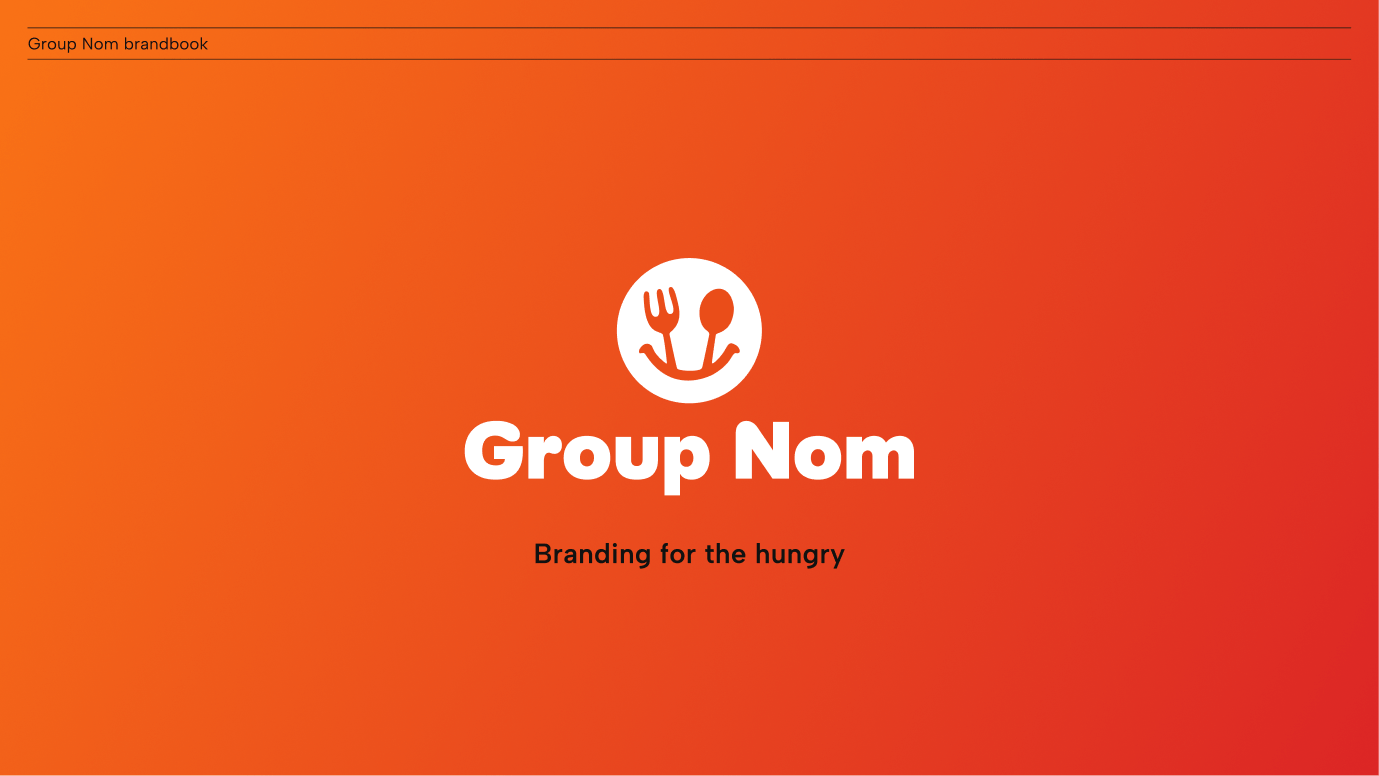
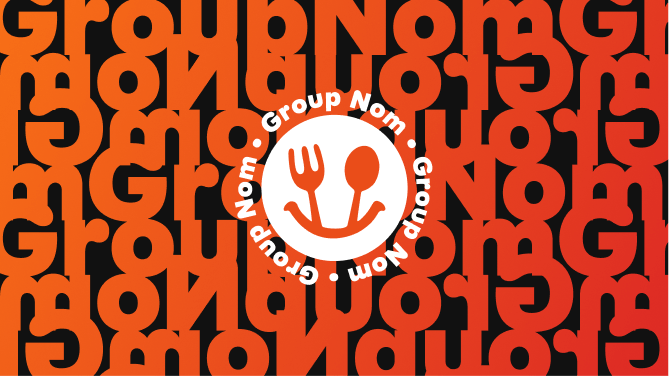
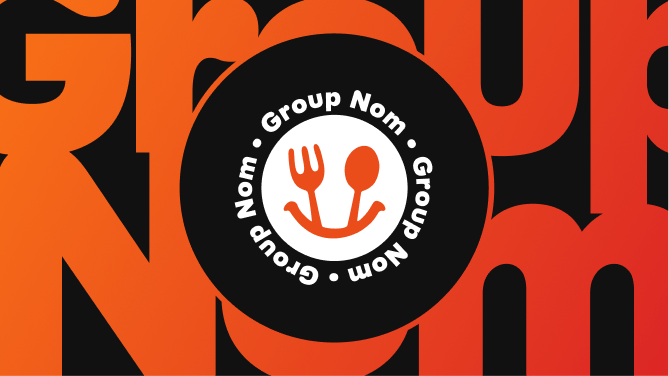
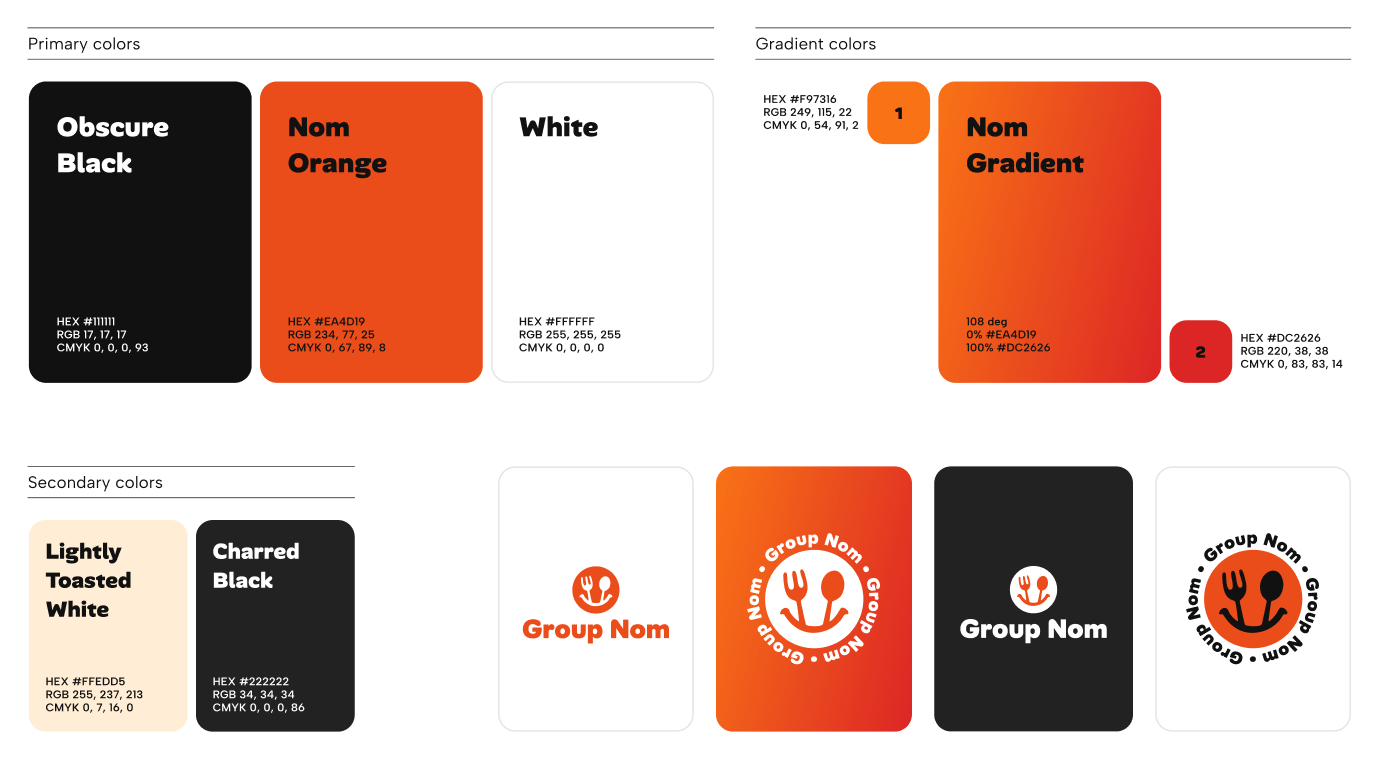
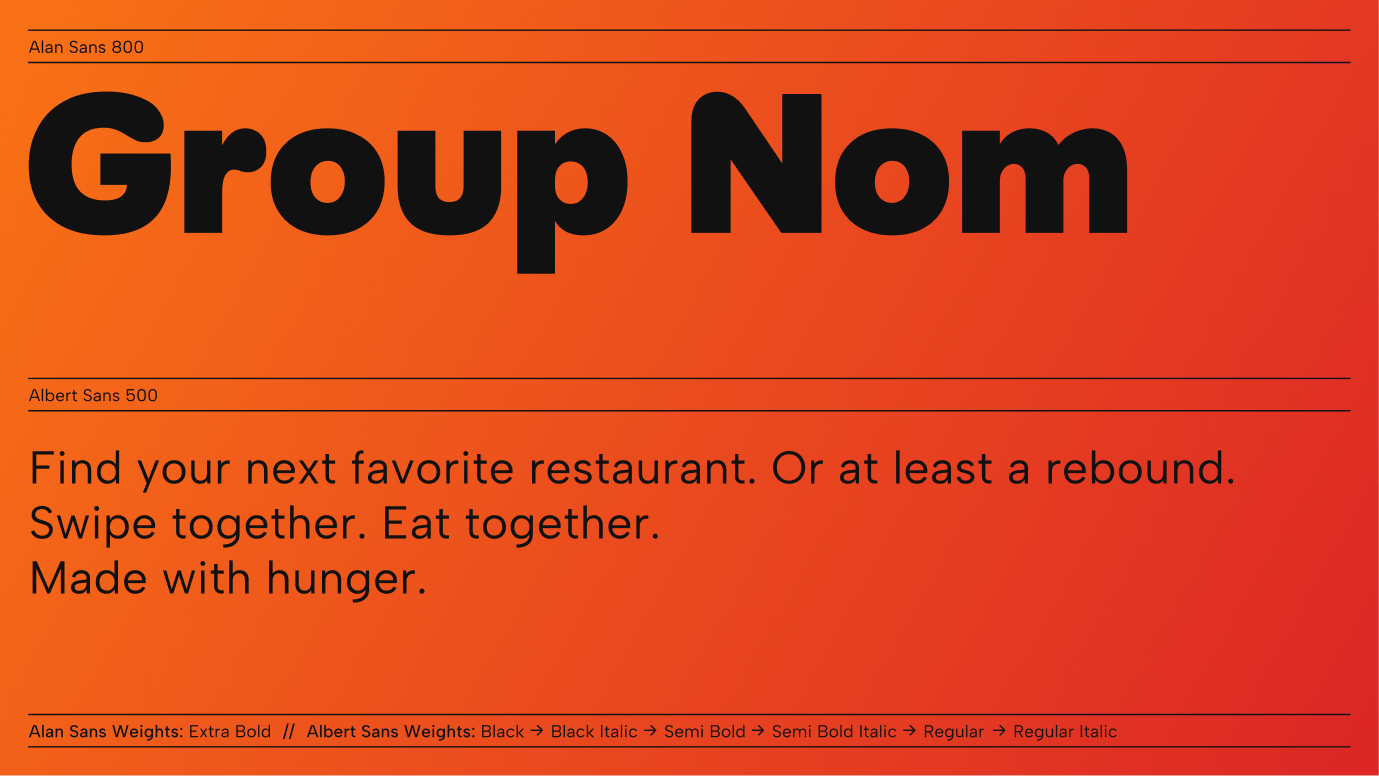
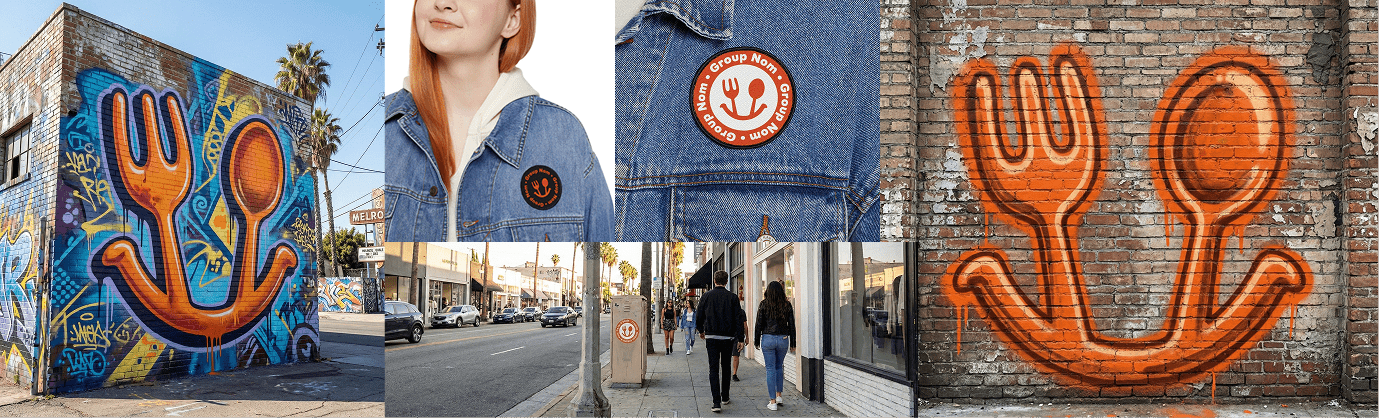
Part of building a complete product is crafting an identity that holds together. I developed Group Nom's brand to match the product's personality: social, low-pressure, and a little hungry. The logomark, color palette, and typography all reinforce that.